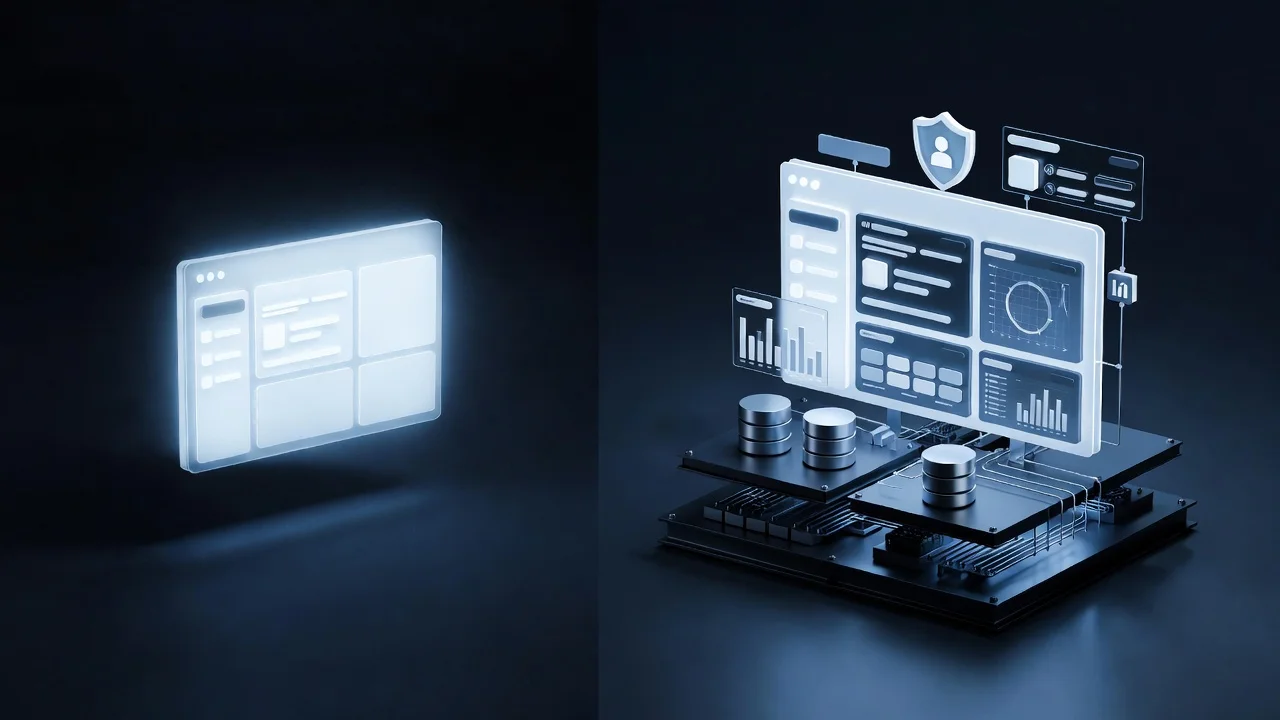
AI en no-code tools maken prototyping extreem snel. Dat is waardevol, maar veel demo's lopen vast zodra echte gebruikers, echte data en betrouwbaarheidseisen meespelen. Deze gids laat zien wat er moet veranderen voordat je verantwoord live gaat.
Waarom productie anders is dan een demo
- Echte gebruikers tonen edge cases Demo-flows zijn meestal optimistisch. Productiegedrag bevat incomplete input, onverwacht gebruik en grillige belasting.
- Dataconsistentie wordt cruciaal Als schema en databoundaries niet kloppen, verandert groei snel in migratieproblemen en operationele ruis.
- Security kun je niet uitstellen Productie vraagt om duidelijke auth-grenzen, rechtenstructuur, logging en verdedigbaar datagebruik.
- Observability moet direct goed staan Zonder logs en alerts reageer je te laat en ben je vooral aan het gokken bij incidenten.
Productie-checklist (kort en praktisch)
- Authenticatie en rollen Definieer wie wat mag en zorg dat kritieke acties expliciet, gelogd en testbaar zijn.
- Datamodel en migraties Zorg voor veilige schema-evolutie zodat releases geen downtime of dataverlies veroorzaken.
- Error handling en fallback Ontwerp gedrag voor timeouts, API-fouten en degradatie voordat gebruikers dat voor je testen.
- Logging, monitoring en alerting Maak incidenten vroeg zichtbaar met bruikbare telemetry en duidelijke ownership.
- CI/CD en releaseproces Werk met herhaalbare deployments zodat releasen veilig en voorspelbaar wordt.
- Performancebaseline Test kernflows onder load om verrassingen te voorkomen bij groei.
Wat wij doen in een Productionization Sprint
Onze Productionization Sprint is bedoeld voor founders met een werkend prototype. In 2-4 weken auditen, stabiliseren en shippen we een productiebasis met duidelijke vervolgstappen.
Signalen dat je prototype nog niet productierijp is
Als deployments handmatig zijn, error handling onduidelijk is, rollen niet scherp staan of releasekwaliteit niet vertrouwd wordt, is productionization de logische volgende stap.
Hoe een goede productie-basis eruitziet
Na productionization zie je voorspelbare releases, minder incidenten, heldere ownership en een roadmap die weer vooruit kan zonder steeds brandjes te blussen.
Heb jij al een prototype en wil je het serieus maken?
Heb je al een prototype? Dan is dit vaak de stap met de hoogste impact voordat je verder opschaalt.
Volgende stap voor jouw bedrijf
Als dit artikel aansluit op jouw situatie, helpen deze pagina's je om de juiste AI Medewerker te kiezen en sneller resultaat te boeken.